

What a three-year-old quietly taught me about leadership, resilience, and beginning again
Over the last few years, I’ve spent a lot of time with my niece.
She was born a few years ago, and like most toddlers, she moves through the world with a kind of energy that is both exhausting and oddly profound.
At first, you don’t notice it. You’re just trying to keep up, but if you slow down and really watch her, you start to see something we adults seem to have misplaced.
Everything is new. Everything is interesting. Everything deserves attention.
She’ll stop mid-walk because a leaf looks fascinating. Or because light is bouncing off the floor in a way she hasn’t seen before. Or because a cardboard box might secretly be a spaceship or a princess castle.
There’s this constant look in her eyes, wide, bright, almost starry, like the world is still a little bit magical. Nothing is ordinary yet and somewhere between stacking blocks with her and answering her endless “why” questions, I found myself thinking:
When did we stop looking at things like this?
Children don’t approach life like experts; they rather approach it like explorers.
They don’t assume they know, they assume there’s something to discover.
If a tower of blocks falls, she doesn’t sit there questioning her capability or competence.
She stares at it for a second, sometimes cries if it startled her, wipes her eyes, and starts again.
Maybe a little slower this time. Maybe with one block less. Maybe with a completely different design, but she starts again.
There’s no story attached to the fall.
No “I’m bad at this.” No “This isn’t for me.” No “What will people think?”
Just: That didn’t work. Let’s try differently.
It’s such a simple reaction and yet, it feels almost radical when you compare it to how adults behave at work.
Somewhere along the way, we trade curiosity for composure.
We learn how to look professional. How to sound certain. How to behave like we’ve “arrived.”
Especially the more senior we become, there’s an unspoken corporate rulebook that says:
Don’t look unsure. Don’t ask obvious questions. Don’t experiment publicly. Definitely don’t fail visibly.
Be the expert. Project maturity. Have answers and before you know it, you’re not exploring anymore.
You’re performing.
I remember earlier in my career trying very hard to look like I knew everything.
I prepared heavily for meetings. Rehearsed responses. Avoided questions that might make me look inexperienced.
If someone asked something and I didn’t know, I felt it physically, like I had been exposed.
So I filled the silence quickly. Sometimes too quickly. Back then, I thought competence meant certainty.
Now I’m not so sure because after two decades across different industries, countries, systems, and teams, here’s what I’ve quietly learned:
The more you know, the more you realise how much you don’t (reminds me of a t – shirt my sister in law got me from Greece with a quote from Socrates – “The only thing I know is that I know nothing”)
Every time you think you’ve seen it all, something new shows up and gently humbles you.
A new behaviour. A new market dynamic. A new human variable you hadn’t accounted for.
Experience doesn’t make the world simpler. It makes it more nuanced and nuance doesn’t respond well to certainty.
It responds to curiosity.
There’s a line often attributed to Albert Einstein that I’ve always liked:
“I have no special talents. I am only passionately curious.”
Whether he said it exactly like that or not almost doesn’t matter. It captures something true.
Curiosity isn’t childish. It’s intelligent.
Even Harvard Business Review frequently writes about learning agility and curiosity as defining traits of effective leaders, not just knowledge or experience, but the ability to keep learning faster than the world changes and the world is changing quickly 9way too quickly).
If we cling too tightly to what we already know, we quietly become outdated, not because we lack skill but because we stopped wondering.
Spending time with my niece has reminded me of something I didn’t expect to relearn at this stage of life.
There’s strength in staying a beginner. There’s clarity in asking simple questions. There’s resilience in not attaching your identity to every fall and there’s something deeply refreshing about looking at problems with fresh eyes, almost as if you’re seeing them for the first time.
Children don’t protect an image. They don’t worry about appearing smart. They’re too busy being curious.
In many ways, that’s far more efficient as they spend all their energy learning, none of it pretending.
These days, when I walk into a new client engagement, I try to carry a little bit of that mindset with me. Not the chaos, just the openness.
I remind myself not to arrive as “the expert” , even if that’s what people expect.
Instead, I try to arrive as the observer. The learner. The person willing to say, “Help me understand” , because the most useful insights rarely come from clever answers.
They come from simple questions asked sincerely.
Why do we do it this way? What if we tried something else? What are we assuming is true?
Questions a child wouldn’t hesitate to ask, Questions adults sometimes forget to.
Maybe maturity isn’t about becoming more serious.
Maybe it’s about becoming comfortable enough to stay curious, to keep a small part of yourself uncorrupted by titles and expectations.
To still look at the world with a bit of wonder, to fall, cry if you must, and try again anyway.
To treat each challenge not as a test of your competence, but as the next small adventure, because mastery, I’m beginning to think, isn’t about having all the answers.
It’s about never losing the desire to explore.
At Vani Malik Consulting, that’s the mindset we try to bring into every piece of work, not certainty, but curiosity. Not performance, but perspective.
Sometimes the most powerful thing a leader can say isn’t “I know.”
It’s simply – “Let’s look at this with fresh eyes.”
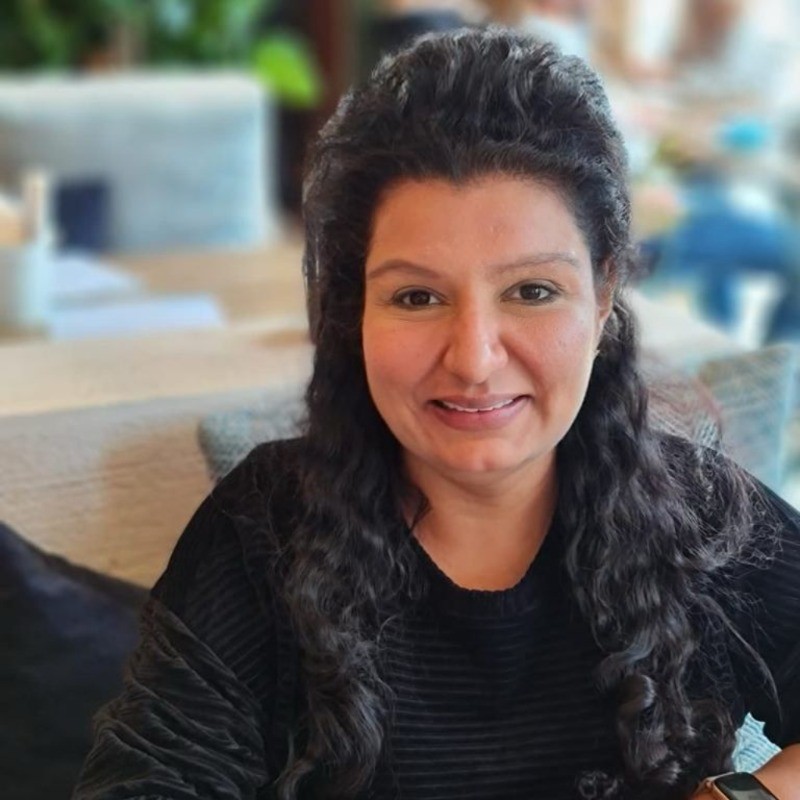
Hi, I’m Vani Malik, a business consultant now based in Colchester. For over 20 years, I’ve worked with global background screening and HR service companies, supporting clients across Europe, Asia, and North America.