
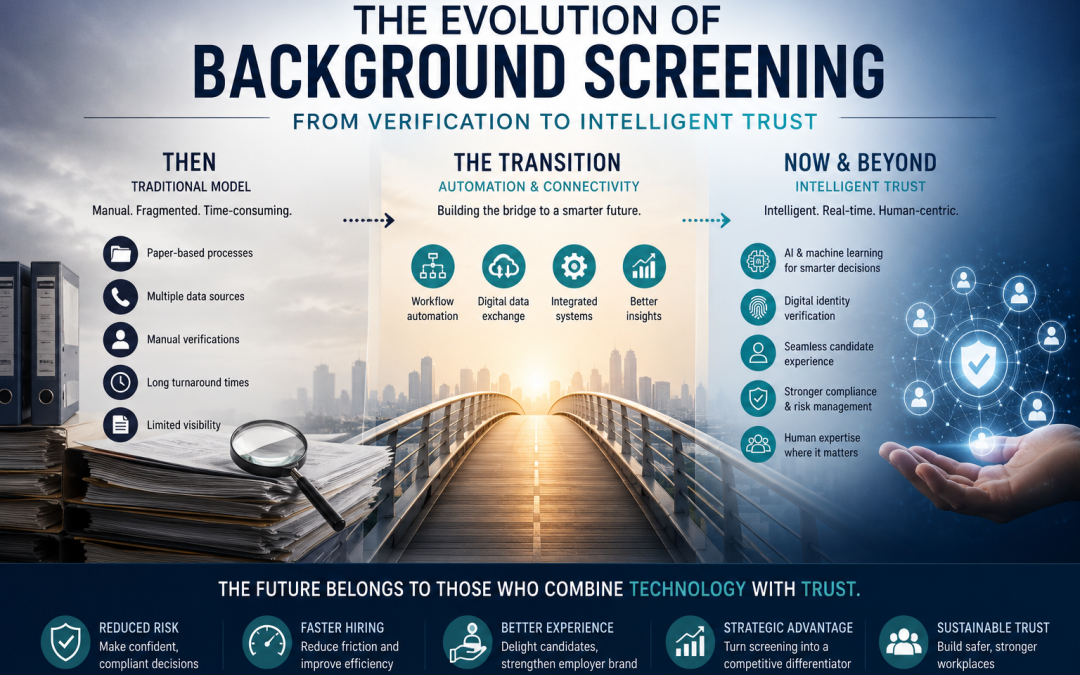
Background screening is evolving beyond verification. Discover how technology, automation and human expertise are reshaping the future of hiring.
If background screening was built today from scratch, would it look anything like it did twenty years ago, probably not.
For decades, the industry has focused on one primary objective: verifying information accurately and consistently. It was built around robust processes, established data sources and operational excellence. These foundations helped organisations reduce hiring risk and created the standards that many employers continue to rely on today.
Those principles remain as important as ever, though what has changed is the world around them as hiring has become global, candidates expect digital experiences and organisations want faster turnaround times without compromising quality. Artificial intelligence and automation are no longer future concepts as they are becoming everyday tools.
As a result, background screening is evolving from a verification service into a broader trust-enablement function.
The Industry Is Entering Its Next Chapter
Traditional screening providers have spent years building global networks, developing operational expertise and navigating increasingly complex regulatory requirements and their strength has always been reliability, scale and consistency.
At the same time, a new generation of technology-led providers has challenged long-standing assumptions about how screening should be delivered.
Rather than asking how to improve existing processes, they have asked a different question:
“If candidates expect to open a bank account or verify their identity from a smartphone within minutes, why should employment screening feel any different?”
That question has accelerated innovation across the industry – digital identity verification, automated workflows, candidate self-service portals and API-driven integrations are becoming increasingly common, not because they’re fashionable, but because they respond to changing expectations from employers and candidates alike.
This isn’t a battle between old and new as It’s rather an evolution where each approach is influencing the other.
Speed Alone Is Not Innovation
It’s tempting to measure progress by turnaround times as faster screening is valuable, but speed without confidence creates new risks.
The real opportunity lies in removing unnecessary manual effort while strengthening the quality of decision-making.
Automation should free experienced professionals to focus on exceptions, judgement and candidate support and not simply replace people.
The most successful organisations will use technology to enhance expertise, not eliminate it.
The Candidate Has Become Central
Historically, much of the industry’s attention was directed towards employers.
Today, the candidate experience has become equally important as applicants expect transparency and they want to know what information is being requested, why it’s needed and how long the process will take.
Simple digital journeys, clear communication and real-time updates are no longer considered premium features as they are rather becoming expected standards.
Improving candidate experience doesn’t just benefit applicants as it strengthens employer brand, reduces delays and improves completion rates and makes everyone wins.
Trust Remains the Constant
Technology will continue to transform how background screening is delivered. Artificial intelligence will analyse information more efficiently, automation will reduce repetitive tasks and digital identity solutions will continue to mature, yet the purpose of background screening remains unchanged.
It exists to build trust – trust between employers and candidates, between organisations and regulators, trust that hiring decisions are based on verified information rather than assumptions.
Technology can make trust easier to establish, but it cannot replace the responsibility of making fair, informed and accountable decisions.
Looking Ahead
The future of background screening is unlikely to belong exclusively to either traditional operational models or digital-first platforms.
Instead, it will rather belong to organisations that successfully combine the strengths of both – deep industry expertise, intelligent technology, operational excellence, exceptional candidate experience and above all, a commitment to building trust.
The industry is no longer simply verifying information. It is helping organisations hire with greater confidence in an increasingly digital world.

Hi, I’m Vani Malik, a business consultant now based in Colchester. For over 20 years, I’ve worked with global background screening and HR service companies, supporting clients across Europe, Asia, and North America.